
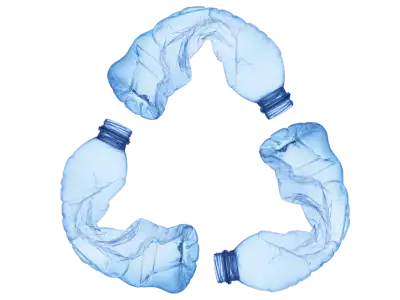
 When it comes to recycling, most of us want to do the right thing. We rinse out our containers, check for the chasing arrows symbol, and toss our plastics into the recycling cart with the hope that they’ll be transformed into something new. But what actually happens to that plastic after it leaves your curb?
The truth is: not all plastics are created equal, and many don’t get recycled at all.
This article aims to clear up the confusion, explain the process, and help you make informed decisions about the plastics you use every day. Because when we recycle right, we not only reduce waste—we support local jobs, save taxpayer dollars, and protect valuable resources.
Understanding the Numbers on Plastic
Most plastic packaging has a small triangle with a number inside it, usually on the bottom. This number, ranging from 1 to 7, is called a “resin identification code.” It tells us what kind of plastic the item is made from.
But here’s the catch: the number does not mean the item is recyclable. It simply tells recyclers what type of plastic it is. Some types are easier to recycle and have strong markets; others are not. In our community, only a few of these plastics are accepted in our curbside recycling programs. Rigid plastic containers are recycled.
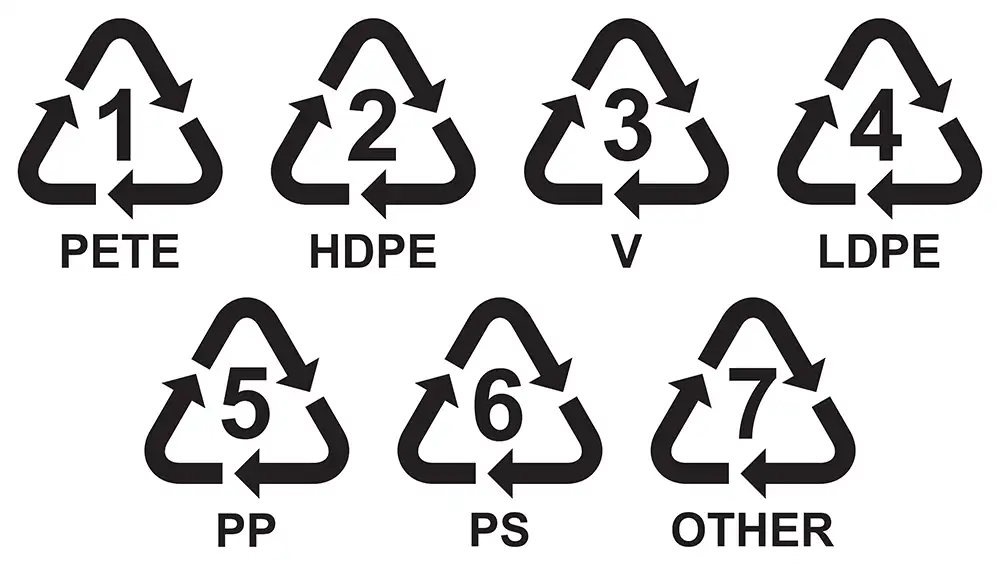
Here’s a quick breakdown of the most common types:
#1 (PET or PETE) – Used for beverage bottles and some clamshell containers. Lightweight and easily recycled into fiber for clothing, carpeting, or new containers. Accepted curbside.
#2 (HDPE) – Found in milk jugs, detergent bottles, and juice containers. This plastic is valued for its strength and is frequently recycled into piping, plastic lumber, or more bottles. Both clear and colored are accepted curbside.
#5 (PP or Polypropylene) – Found in yogurt cups and other food containers, takeout containers, and medicine bottles. It’s durable and heat-resistant, and is increasingly recyclable in curbside programs, including ours.
Rigid Containers #1, #2, and #5 – Used for containers like laundry baskets and buckets. Typically recyclable but may require special collection if too large for your collection cart or bin.
The following plastics are not accepted in local curbside recycling, including film and flexible packaging:
- #3 (PVC) – Common in pipes, some food packaging, and shrink wrap. Difficult to recycle and may contain additives that can be harmful.
- #4 (LDPE) – Often found in plastic bags, squeezable bottles, and film wrap. Flexible and lightweight but not accepted curbside.
- #6 (Polystyrene or Styrofoam) – Found in foam takeout containers, packing peanuts, and disposable plates. Not recyclable in most systems and often breaks into tiny pieces that pollute the environment. Foam single use food service ware no longer can be sold or distributed in California.
- #7 (Other/Mixed Plastics) – A catch-all category for plastics that don’t fit in the first six. These may include multi-layer packaging or bio-based plastics and are not recyclable curbside.
Even within accepted plastics, it’s important to make sure items are clean and empty before placing them in your recycling cart.
Why Some Plastics Can’t Be Recycled
Some plastics, like black-colored containers, thin films, and multi-layer packaging, can’t be detected by sorting equipment or are made of mixed materials that are difficult to separate. These items are almost always landfilled.
Non-recyclable plastic must be removed so as not to contaminate recyclable material. It’s far more expensive to sort non-recyclable plastic and then send it to the landfill than to landfill it directly.
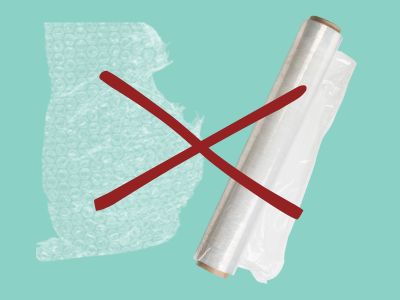
Film and flexible plastic act like paper in the recycling system, reducing cardboard and paper recycled value.
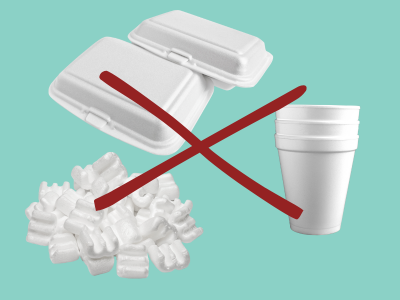
Plastic foam explodes into shards that cannot be removed effectively.
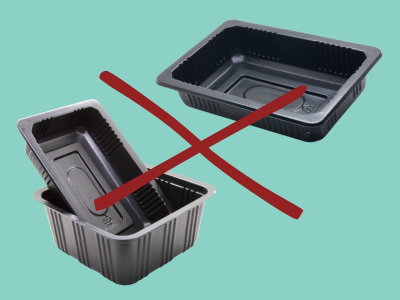
Black plastic containers cannot be read by sorting equipment so end up going to the landfill.
From Symbol to Standard: How California’s SB 343 Helps Consumers
To help reduce confusion, California passed SB 343, a “Truth-in-Labeling” law that sets new standards for recycling labels.
Beginning in 2026, products and packaging sold in California can only display the chasing arrows symbol if the item is routinely collected and recycled in the state. CalRecycle has conducted a statewide study of recycling programs to determine which materials meet that standard.
As this new system rolls out, consumers will start seeing labels that clearly indicate:
- Items accepted curbside
- Items requiring drop-off or special handling
- Items that are not recyclable at all
These standardized labels are designed to cut through greenwashing, reduce contamination, and help residents make informed decisions that support local recycling markets.
Visit CalRecycle’s Recycling Labels page to learn more. Hint: Plastic bottles and rigid containers (#1, #2, #5) will carry the recycling label. Film, foam, flexible and others cannot claim to be recyclable.
What Happens to Plastic After it’s Collected?
After your plastic is picked up from the curb, it’s taken to a Materials Recovery Facility (MRF) where it’s sorted, baled, and prepared for sale to manufacturers.
Most communities in the High Desert and Mountain areas are served by the Victor Valley MRF. The MRF is owned by the Town of Apple Valley and City of Victorville; administered by the Mojave Desert and Mountain Recycling Authority; and operated by Burrtec Waste Industries.
The MRF acts as a “middleman” between residents who recycle and the industries that turn recyclable materials into new products.
Here’s the general process:
- Trucks drop off mixed recyclables
- Conveyors, screens and machines sort out plastics from paper and metal
- Staff hand-pick contaminants
- Sorted plastic is compressed into large bales
- Bales are sold to manufacturers to be made into new products
Contamination Costs Everyone
When non-recyclable or dirty items end up in the recycling stream, they slow down processing and increase costs for everyone.
- Workers have to manually remove contaminants
- Machines can get jammed or damaged which can be dangerous for workers and lead to expensive repairs
- Bales of recyclables may be downgraded to lower value or rejected by buyers causing them to be sent to landfill
In fact, contamination was a major reason why China stopped accepting most of the world’s recyclables in 2018.
The Global Picture: Markets Matter
For many years, the U.S. exported a large portion of its plastic recyclables to China and other countries. But in 2018, China banned the import of most post-consumer plastic due to high contamination rates.
This shift put pressure on U.S. recycling programs to clean up their materials and develop domestic markets for plastics.
The good news? That change has created more local jobs in sorting and processing and increased investment in domestic recycling infrastructure.
The challenge? We now have to be more selective about what goes in the bin to ensure it can actually be sold and recycled. Doing your part to recycle right helps avoid costly re-sorting and ensures our local program remains economically viable. Material sales value offsets processing costs and lowers rates.
What Does Recycled Plastic Become?
Recycled plastic can be transformed into a variety of new products, though most are lower-value items that are not recyclable again—a process known as downcycling. While it’s helpful to recycle when possible, it’s important to understand the limitations.
Here are a few of the more common items made from recycled plastic:
PET (#1) – Often turned into new beverage bottles, clamshells, clothing, carpeting, or packaging materials.
HDPE (#2) – Commonly used to make outdoor furniture, plastic lumber, piping, and new detergent or shampoo bottles.
PP (#5) – Can be recycled into items like storage bins, brooms, ice scrapers, and car battery cases.
Despite these uses, most recycled plastic only gets one additional life. After that, it often becomes waste again and ends up in the landfill.
That’s why reducing plastic use in the first place is so important—because even recyclable plastic doesn’t stay in the loop forever.
A Word About Microplastics
Plastic doesn’t just disappear—it breaks down into smaller and smaller pieces over time. Sunlight, heat, and physical wear cause it to degrade and soften, creating particles known as microplastics. These particles are now found almost everywhere: in soil, rivers, oceans, the air we breathe, and even in our food and drinking water.
Researchers are finding growing evidence that humans and animals are ingesting microplastics daily. While the long-term health effects are still being studied, scientists agree that reducing plastic waste at the source is one of the best ways to limit microplastic pollution in the environment. Choosing durable, reusable products and properly recycling the plastics you do use can help keep them out of our ecosystems—and out of our bodies.
Reduce vs. Recycle
Because plastic recycling is limited and markets are unstable, the best thing we can do is reduce our use of plastic altogether.
Recycling should be the last step—reducing is where real impact starts.
Look for ways to avoid single-use plastics by choosing reusable or longer-lasting alternatives.
Simple swaps include:
- Reusable shopping bags instead of plastic or paper
- Refillable water bottles and coffee cups instead of disposable ones
- Bulk bins or large containers to minimize packaging waste
- Glass or aluminum containers whenever possible—both are infinitely recyclable without losing quality
By reducing plastic use, we cut waste at the source, conserve resources, and lower processing costs for our local waste programs.
Every small choice adds up—and in many cases, the more sustainable option is also the more durable and cost-effective one in the long run.
Recycle Right, Every Time
Recycling plastic isn’t as straightforward as we’d like it to be. But by understanding how the system works, we can avoid costly mistakes, protect local jobs, and help our programs thrive.
To learn exactly what goes in your curbside bin, check out our What to Recycle page. It covers the four main categories of items accepted in most Mojave Desert and High Mountain area programs—Paper, Glass, Metal, and Plastic—as well as where to take materials that can’t go in your bin.
Because recycling rules can vary by location, it’s also important to look up your local hauler and follow their guidelines. A few extra seconds to recycle right keeps the whole system running smoothly—and that’s a win for our communities and the planet.